
Cheese
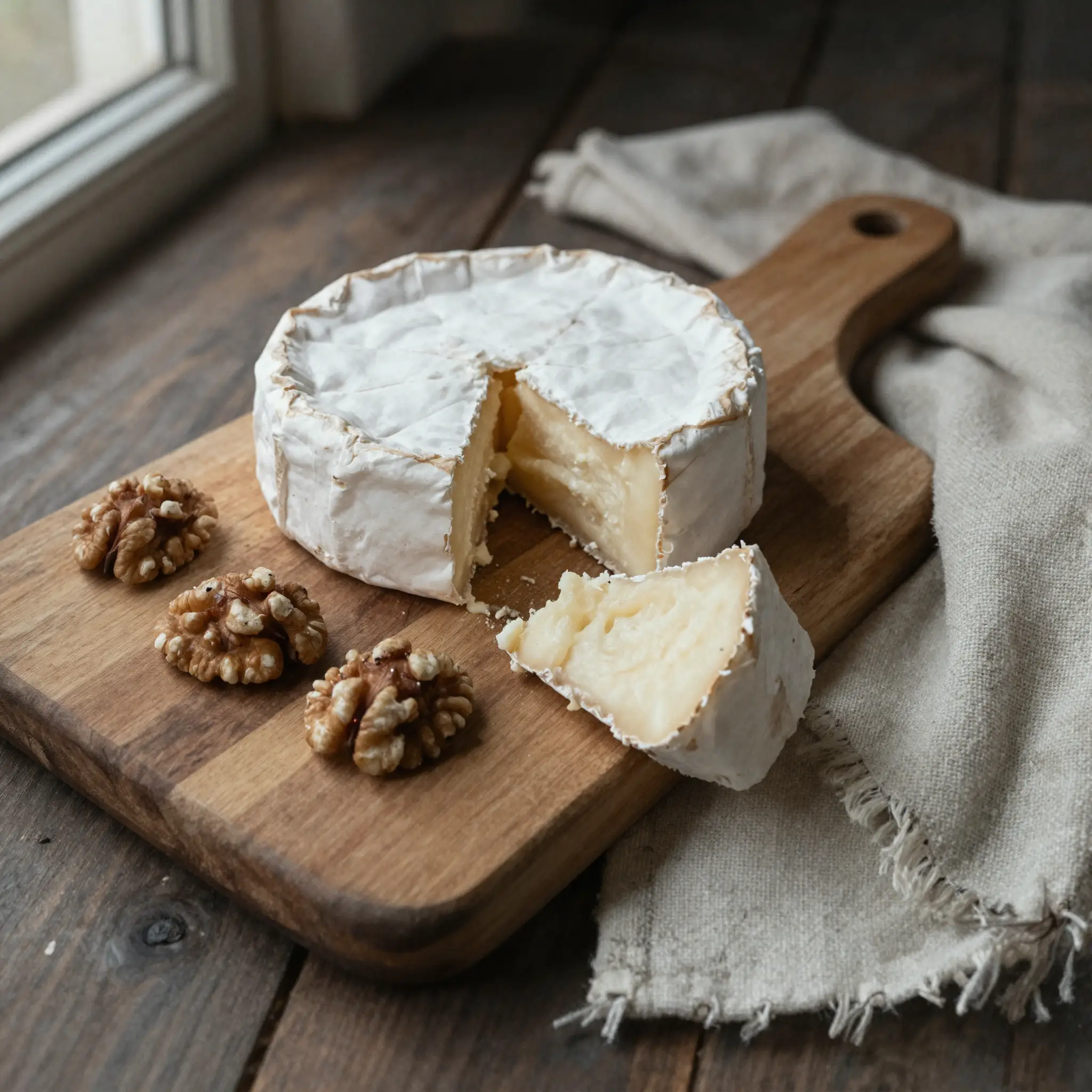
Cheese — soft, surface-ripened, bloomy-rind style
Dairy product
Facts
| Category | Dairy |
|---|---|
| Origin | 🇫🇷 France |
Safety
- Documented risk factor — raw-milk soft cheese carries materially higher pathogen risk (Listeria monocytogenes is the specific, well-documented concern for this product category, given Listeria's ability to grow at refrigeration temperatures and its documented association with soft, surface-ripened, raw-milk cheeses in food-safety literature) than pasteurized-milk versions or long-aged hard cheeses. Safe-practice guidance:
(a) use pasteurized milk for commercial/consumer-facing production — this is the single highest-leverage safety control for this product category; several jurisdictions restrict or require aging minimums for raw-milk soft-cheese sale specifically because of the Listeria concern;
(b) mold discrimination is a defined, not ambiguous, control point here — only verified food-safe Penicillium camemberti (or P. candidum) spore inoculum should be used for intentional rind development; environmental/wild mold contamination on a cheese surface is not a substitute and is a discard-triggering event, distinct in kind from the intentional inoculated rind;
(c) pregnant individuals and other high-risk populations are commonly advised (in general food-safety guidance, not FRMNT-original) to avoid unpasteurized soft cheeses specifically because of the Listeria risk — this is noted as a consumer-facing safety-relevant fact appropriate for surfacing in the app, not merely a production-side note.
Method
Cheese (Soft, Bloomy-Rind, Camembert-Type)
- Pasteurized whole cow's milk — 4 L — SAFETY CONTROL (pasteurized), see linked Variant
- Mesophilic LAB starter culture — per the culture's dosing, illustrative
- Penicillium camemberti surface-mold culture — per the culture's dosing, illustrative
- Rennet — per the rennet's dosing, illustrative
- Non-iodized salt, for surfacing the formed cheese — illustrative
- 1
Step 1
Warm the pasteurized milk gently to the starter's working temperature.
- 2
Step 2
Inoculate with the mesophilic LAB starter (and the P. camemberti, if adding it to the milk rather than the surface) and let it ripen.
- 3
Step 3
Add the rennet and stir it in briefly, then leave the milk absolutely still to set — the coagulation here is enzymatic, running in parallel with the LAB's acidification.
- 4
Step 4
Test for a clean break, then cut the curd.
- 5
Step 5
Let the cut curd rest, then ladle it gently into molds — soft cheese curd is fragile and must not be handled roughly.
- 6
Step 6
Let the cheeses drain and self-press under their own weight, flipping them periodically.
- 7
Step 7
Unmold and salt the surface.
- 8
Step 8
If the mold was not added to the milk, inoculate the rind surface with P. camemberti spores now.
- 9
Step 9
Ripen in a cool, humid environment for weeks until a white bloomy rind covers the cheese and the paste softens inward from the rind.
Frequently asked questions
- What is Cheese?
- Dairy product
- Where does Cheese come from?
- Cheese is traditionally made in France.
- Is Cheese safe to make at home?
- Documented risk factor — raw-milk soft cheese carries materially higher pathogen risk (Listeria monocytogenes is the specific, well-documented concern for this product category, given Listeria's ability to grow at refrigeration temperatures and its documented association with soft, surface-ripened, raw-milk cheeses in food-safety literature) than pasteurized-milk versions or long-aged hard cheeses. Safe-practice guidance:
(a) use pasteurized milk for commercial/consumer-facing production — this is the single highest-leverage safety control for this product category; several jurisdictions restrict or require aging minimums for raw-milk soft-cheese sale specifically because of the Listeria concern;
(b) mold discrimination is a defined, not ambiguous, control point here — only verified food-safe Penicillium camemberti (or P. candidum) spore inoculum should be used for intentional rind development; environmental/wild mold contamination on a cheese surface is not a substitute and is a discard-triggering event, distinct in kind from the intentional inoculated rind;
(c) pregnant individuals and other high-risk populations are commonly advised (in general food-safety guidance, not FRMNT-original) to avoid unpasteurized soft cheeses specifically because of the Listeria risk — this is noted as a consumer-facing safety-relevant fact appropriate for surfacing in the app, not merely a production-side note.
Community results
No community results published for this ferment yet.
Related library reading
- White Film on Your Ferment: Kahm Yeast or Mould?How to tell harmless kahm yeast from mould on sauerkraut and other brined vegetables, and what each one means for the jar.
- How Long Does Fermentation Take? A Timing Reference by FamilyTypical durations for vegetable, dairy, grain, legume and beverage ferments, why every range is wide, and what to measure instead of counting days.
- Natto, Thua Nao, Tempeh and Doenjang: The Two Ways Legumes FermentBacillus and mould take soybeans in opposite chemical directions. Which organism runs which ferment, and what that means for smell, texture and use.