
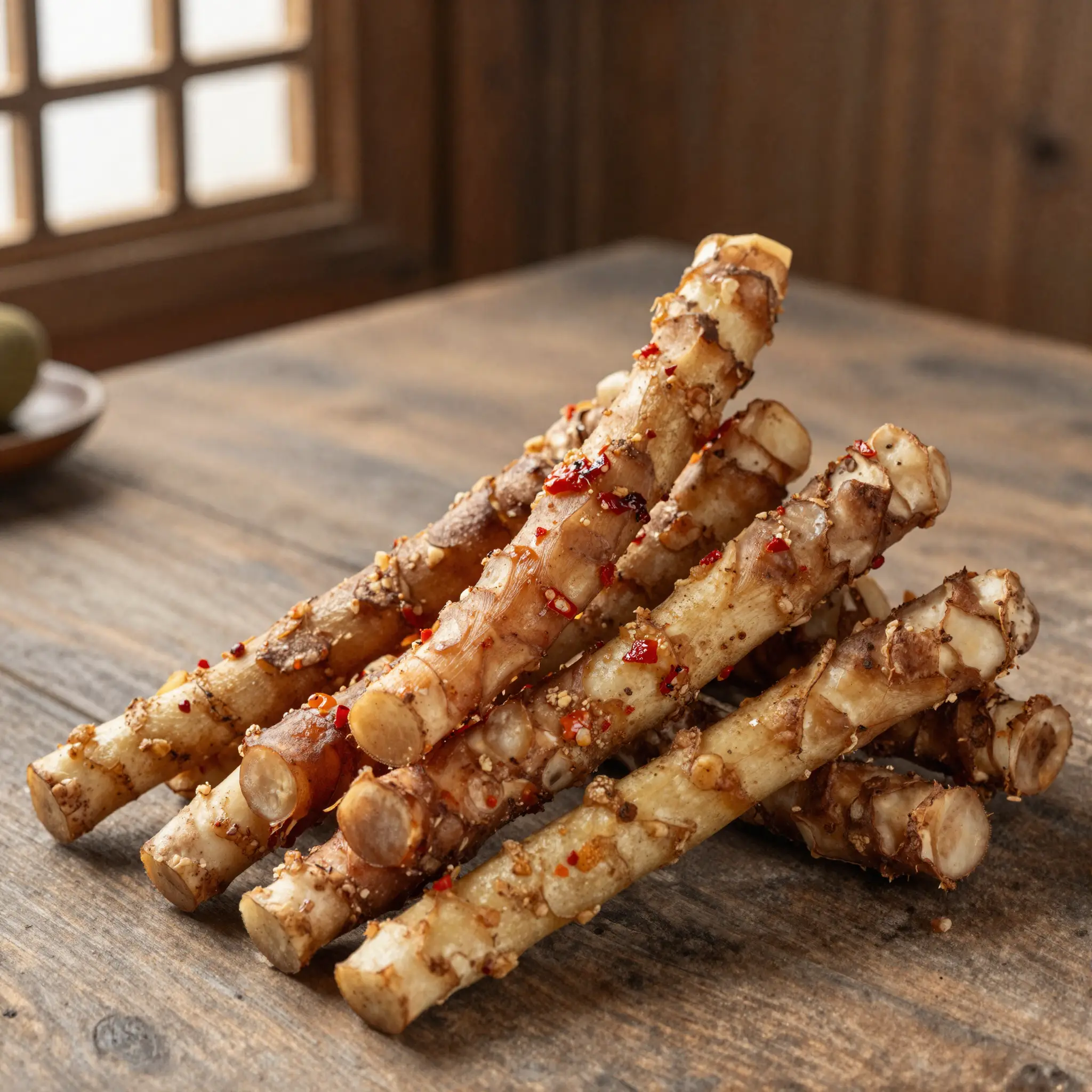
Zha cai (Sichuan fermented mustard-stem pickle)
Zha cai (Sichuan fermented and pressed mustard-stem pickle)
vegetable-ferment-pickle
Facts
| Category | Vegetable |
|---|---|
| Product family | Fermented Mustard Stem/Tuber Pickle |
| Origin | 🇨🇳 China |
Safety
- No zhacai-specific safety literature is present in our sources; the general vegetable lactic-fermentation safety floor is inherited by analogy, not separately confirmed for this specific product. Documented risk factor (by analogy): inadequate salt concentration or incomplete anaerobic packing during the pressing stages can permit spoilage organisms before acidification is complete. Safe-practice guidance:
(a) use adequate salt at each dry-salting stage (no specific %, illustrative figures for this specific solid-state method are not established — unlike the brine-based Variants in this batch, zhacai's dry-salt/press method does not have a simple "% brine" figure in the source base);
(b) keep the pressed vegetable fully packed/excluded from air pockets during curing;
(c) discard on fuzzy surface mould, putrid odour, or sliminess as with any vegetable ferment;
(d) commercial products are typically pasteurised/shelf-stable-packaged — the home/traditional process described here is the fresh-cured, refrigerated-or-cool-cellar-stored form.
Method
Zha Cai (Sichuan Dry-Salted and Pressed Mustard-Stem Pickle)
- Tuber mustard stem (Brassica juncea var. tumida, "zhacai" plant) — ~2000 g, trimmed
- Non-iodized salt — quantity for multi-stage dry-salting (no % given — see Conditions/Safety below) — SAFETY CONTROL, see linked Variant
- Optional finishing (after curing/pressing, non-safety): chili powder, chili oil, sugar (traditional flavour finish only)
- 1
Step 1
Harvest and trim the tuber mustard stem, removing leaves and root ends.
- 2
Step 2
Sun-wilt the trimmed stems briefly to reduce surface moisture.
- 3
Step 3
Dry-salt the wilted stems (first stage) and pack under weight to begin expelling liquid.
- 4
Step 4
Press under weight for a period, then drain off the expelled liquid.
- 5
Step 5
Repeat the dry-salt-and-press cycle in additional stages (traditional multi-stage salting), draining between rounds.
- 6
Step 6
Pack the salted, pressed stems tightly (historically in earthenware jars or pits) to exclude air pockets.
- 7
Step 7
Ferment anaerobically at ambient-to-cool temperature for an extended period (weeks to months).
- 8
Step 8
Check periodically that the pack remains tightly excluded from air; monitor for the safety signals in the linked Variant.
- 9
Step 9
Once cured, remove and season the finished pressed product (e.g. chili, spices) at serving/finishing — this seasoning step is a flavour finish, not part of the preservation mechanism.
Frequently asked questions
- What is Zha cai (Sichuan fermented mustard-stem pickle)?
- vegetable-ferment-pickle
- Where does Zha cai (Sichuan fermented mustard-stem pickle) come from?
- Zha cai (Sichuan fermented mustard-stem pickle) is traditionally made in China.
- Is Zha cai (Sichuan fermented mustard-stem pickle) safe to make at home?
- No zhacai-specific safety literature is present in our sources; the general vegetable lactic-fermentation safety floor is inherited by analogy, not separately confirmed for this specific product. Documented risk factor (by analogy): inadequate salt concentration or incomplete anaerobic packing during the pressing stages can permit spoilage organisms before acidification is complete. Safe-practice guidance:
(a) use adequate salt at each dry-salting stage (no specific %, illustrative figures for this specific solid-state method are not established — unlike the brine-based Variants in this batch, zhacai's dry-salt/press method does not have a simple "% brine" figure in the source base);
(b) keep the pressed vegetable fully packed/excluded from air pockets during curing;
(c) discard on fuzzy surface mould, putrid odour, or sliminess as with any vegetable ferment;
(d) commercial products are typically pasteurised/shelf-stable-packaged — the home/traditional process described here is the fresh-cured, refrigerated-or-cool-cellar-stored form.
Community results
No community results published for this ferment yet.