
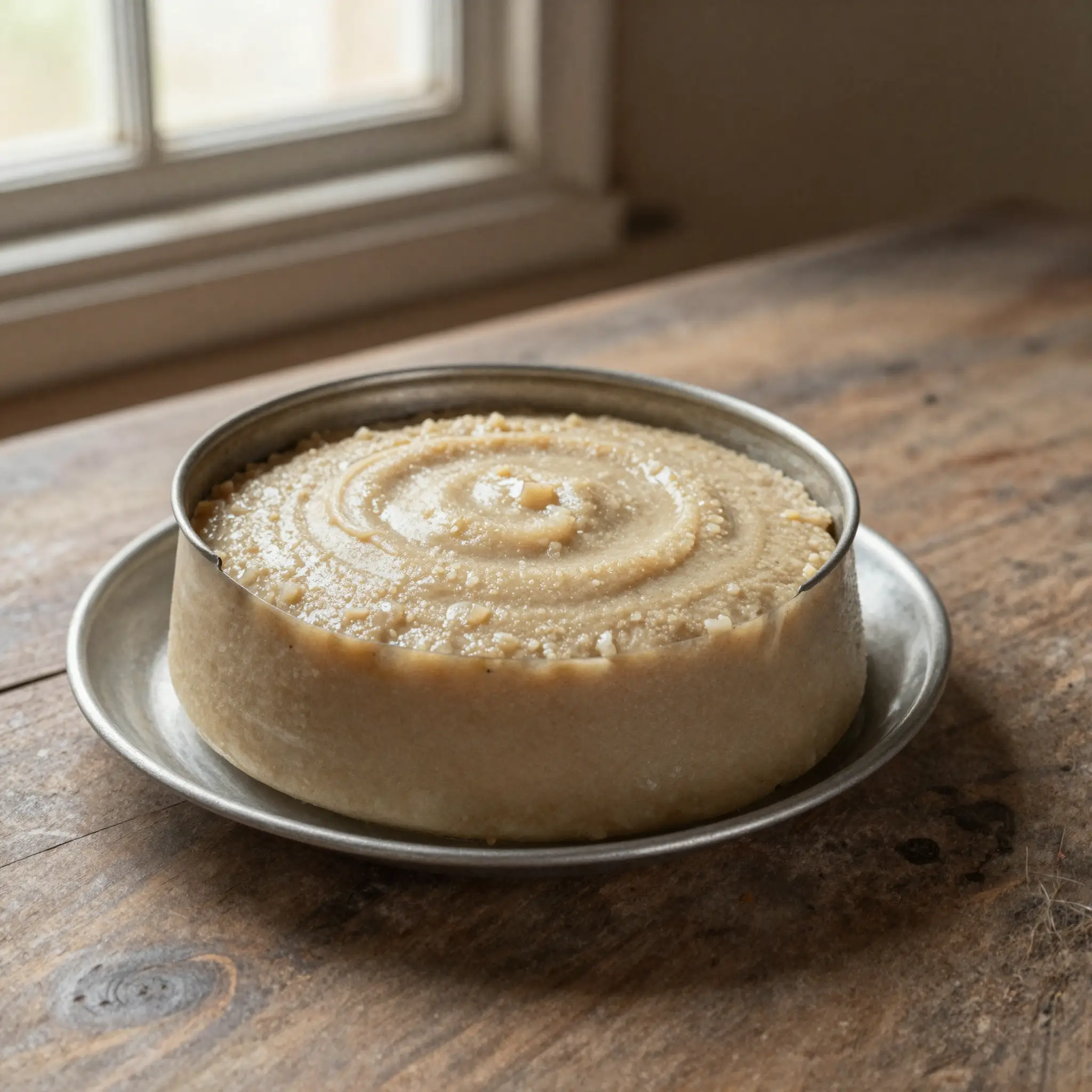
Uji (Kenyan/Tanzanian lactic-fermented cereal porridge)
Porridge/staple
Facts
| Category | Grain / Legume |
|---|---|
| Product family | Lactic-Fermented Cereal Porridge |
| Origin | 🇰🇪 Kenya |
| Key microorganisms | lactic-acid-bacteria |
Safety
- Documented considerations (honest, grain-staple-appropriate):
(a) Uji is a spontaneous or informally back-slopped fermentation with no defined commercial starter culture documented in our sources, so adequate acidification (a genuinely sour gruel, consistent with LAB activity) is the primary indicator that the process has proceeded safely rather than the flour-water mixture having simply sat unfermented;
(b) mould growth or a markedly putrid/off odour (as opposed to the expected sour, mildly fermented cereal aroma) signals spoilage — such batches should be discarded, not consumed, a consideration of particular importance given Uji's common use as an infant weaning food;
(c) the soured gruel is cooked/boiled after fermenting, a heat step that is independently pathogen-inhibitory regardless of the fermentation stage's own safety profile;
(d) as with any cereal-based ferment, mycotoxin/mould awareness for the raw flour is a general, honest consideration — maize, sorghum, and millet flours should be sourced from reputable suppliers and stored dry, as improperly stored cereal grains/flours are a recognized general mycotoxin-risk category in food-safety literature broadly; no specific mycotoxin threshold is asserted, as none is documented;
(e) potable water must be used throughout, a consideration of particular importance given Uji's frequent preparation for infants and young children. Safe-practice guidance: use clean equipment and potable water; ferment the gruel in a clean, covered (not necessarily airtight) vessel at ambient temperature; taste/smell-check before consuming and discard on any mould growth or clearly putrid off-odour; cook the soured gruel thoroughly before serving; store flour dry and from a reputable source; exercise particular hygiene diligence when preparing for infant/weaning use. No specific pH figures, fermentation-duration numerics, or mycotoxin thresholds are asserted — any such figure is illustrative or not established.
Method
Uji (Kenyan/Tanzanian Lactic-Fermented Cereal Porridge)
- Maize, sorghum, and/or millet flour (single or combined, per household custom) — ~200 g
- Water — ~1–1.5 L, potable, divided between the fermentation stage and final cooking/thinning
- Optional: milk, sugar, or salt to taste at serving (serving custom, not part of the ferment)
- 1
Step 1
Mix the cereal flour with a portion of the water into a thin, smooth gruel in a clean, non-reactive vessel.
- 2
Step 2
Cover (not necessarily airtight) and leave to ferment/sour spontaneously at ambient temperature, optionally aided by a spoonful of a previous batch's soured gruel (back-slop).
- 3
Step 3
Check periodically: naturally-occurring LAB acidify the gruel, developing a sour aroma (duration illustrative and household-variable, not specified in our sources — typically several hours to about a day by general practice).
- 4
Step 4
Once adequately soured, transfer to a pot with the remaining water.
- 5
Step 5
Cook, stirring continuously, bringing to a boil and simmering until thickened to the desired porridge consistency (a heat step, independently pathogen-inhibitory).
- 6
Step 6
Adjust consistency with additional potable water if needed.
- 7
Step 7
Serve warm, optionally with milk, sugar, or salt to taste (serving custom, not part of the ferment).
Frequently asked questions
- What is Uji (Kenyan/Tanzanian lactic-fermented cereal porridge)?
- Porridge/staple
- Which microorganisms ferment Uji (Kenyan/Tanzanian lactic-fermented cereal porridge)?
- Uji (Kenyan/Tanzanian lactic-fermented cereal porridge) is primarily driven by lactic-acid-bacteria.
- Where does Uji (Kenyan/Tanzanian lactic-fermented cereal porridge) come from?
- Uji (Kenyan/Tanzanian lactic-fermented cereal porridge) is traditionally made in Kenya.
- Is Uji (Kenyan/Tanzanian lactic-fermented cereal porridge) safe to make at home?
- Documented considerations (honest, grain-staple-appropriate):
(a) Uji is a spontaneous or informally back-slopped fermentation with no defined commercial starter culture documented in our sources, so adequate acidification (a genuinely sour gruel, consistent with LAB activity) is the primary indicator that the process has proceeded safely rather than the flour-water mixture having simply sat unfermented;
(b) mould growth or a markedly putrid/off odour (as opposed to the expected sour, mildly fermented cereal aroma) signals spoilage — such batches should be discarded, not consumed, a consideration of particular importance given Uji's common use as an infant weaning food;
(c) the soured gruel is cooked/boiled after fermenting, a heat step that is independently pathogen-inhibitory regardless of the fermentation stage's own safety profile;
(d) as with any cereal-based ferment, mycotoxin/mould awareness for the raw flour is a general, honest consideration — maize, sorghum, and millet flours should be sourced from reputable suppliers and stored dry, as improperly stored cereal grains/flours are a recognized general mycotoxin-risk category in food-safety literature broadly; no specific mycotoxin threshold is asserted, as none is documented;
(e) potable water must be used throughout, a consideration of particular importance given Uji's frequent preparation for infants and young children. Safe-practice guidance: use clean equipment and potable water; ferment the gruel in a clean, covered (not necessarily airtight) vessel at ambient temperature; taste/smell-check before consuming and discard on any mould growth or clearly putrid off-odour; cook the soured gruel thoroughly before serving; store flour dry and from a reputable source; exercise particular hygiene diligence when preparing for infant/weaning use. No specific pH figures, fermentation-duration numerics, or mycotoxin thresholds are asserted — any such figure is illustrative or not established.
Community results
No community results published for this ferment yet.