
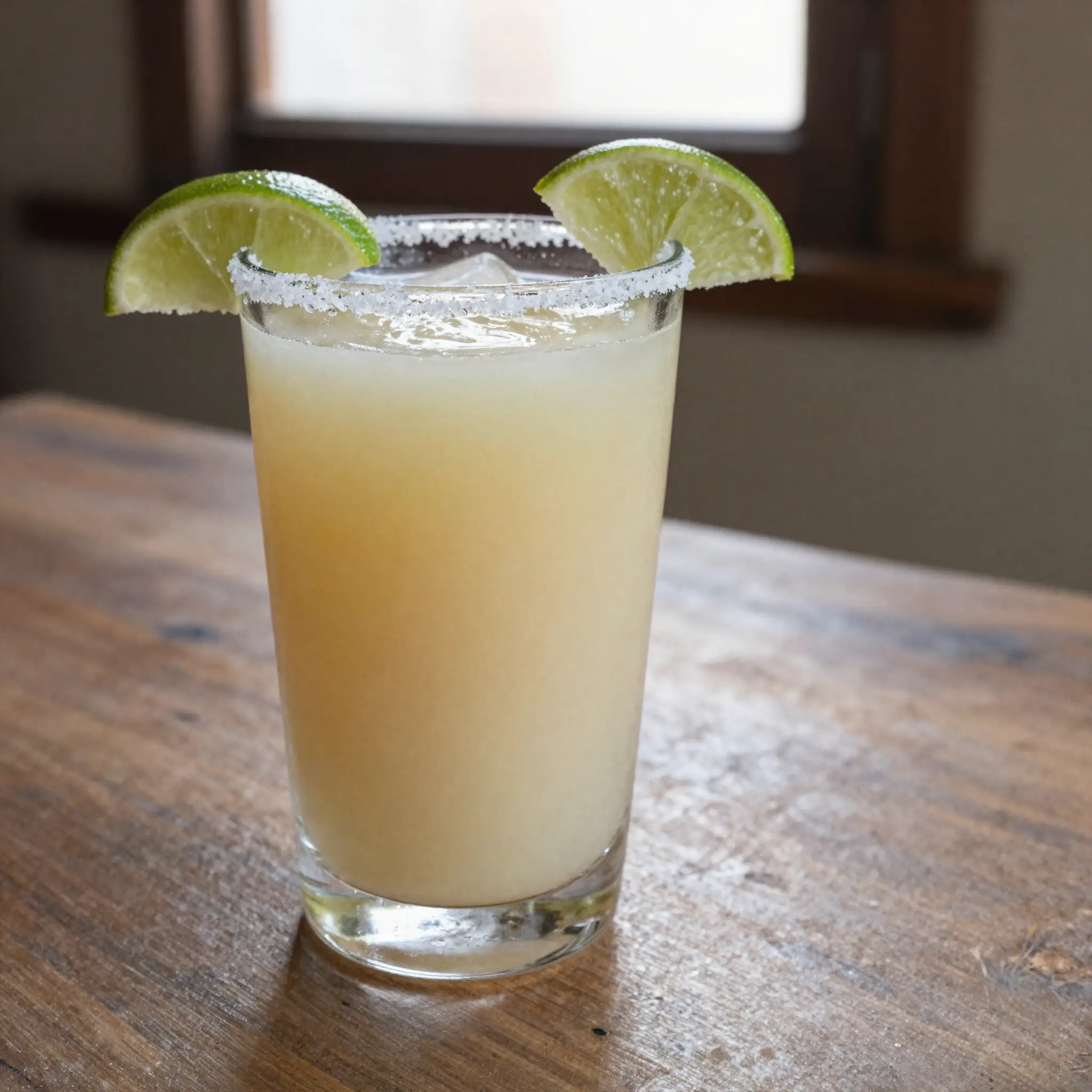
Tejuino (Mexican/Jalisco fermented maize-masa beverage)
Beverage
Facts
| Category | Grain / Legume |
|---|---|
| Product family | Fermented Maize-Masa Beverage |
| Origin | 🇲🇽 Mexico |
| Key microorganisms | lactic-acid-bacteria, yeasts |
Safety
- Documented considerations (honest, beverage-appropriate, paralleling tepache):
(a) tejuino is a spontaneous fermentation with no defined starter culture, so adequate acidification and visible fermentation activity (souring aroma, light bubbling) are the primary indicators of a safely proceeding ferment;
(b) mould growth or a markedly putrid/off odour (as opposed to the expected sour-sweet aroma) signals spoilage — such batches should be discarded, not consumed;
(c) the possible mild alcohol content that can develop, particularly with extended fermentation, should be disclosed to consumers avoiding alcohol, per the same boundary-note discipline as kefir/kumis/shubat/tepache;
(d) if fermented in a sealed or tightly-capped vessel, CO2 from any yeast activity can build pressure — an honest mechanical over-carbonation/bottle-pressure risk, not a fabricated numeric threshold; traditional practice uses a loosely covered vessel;
(e) potable water must be used throughout, both for cooking the masa and for the final dilution step. Safe-practice guidance: use clean equipment and potable water; ferment in a loosely covered (not airtight) vessel at ambient temperature; taste/smell-check before consuming and discard on any mould growth or clearly putrid off-odour; refrigerate once at the desired sourness to slow further fermentation; disclose the possible mild alcohol content where relevant. No specific pathogen thresholds, pH figures, or alcohol percentages are asserted — any such figure is illustrative or not established.
Method
Tejuino (Mexican/Jalisco Fermented Maize-Masa Beverage)
- Maize masa (nixtamalized corn dough, the same base dough used for tortillas) — ~500 g
- Piloncillo or brown sugar — ~200–250 g (illustrative), household-variable, non-safety
- Water — ~2–3 L, potable, used both for cooking the masa and for final dilution
- To serve: fresh lime juice, a pinch of salt, shaved ice or fruit sorbet (nieve) — serving custom, not part of the ferment
- 1
Step 1
Dilute the maize masa with a portion of the water and cook with the piloncillo/brown sugar into a thickened, sweetened gruel.
- 2
Step 2
Cool the cooked mixture to ambient temperature.
- 3
Step 3
Transfer to a clean, non-reactive vessel and cover loosely (not airtight).
- 4
Step 4
Leave to ferment spontaneously at ambient temperature.
- 5
Step 5
Check daily: naturally-occurring LAB sour the mixture, with a possible mild, incidental alcoholic component developing especially with longer fermentation.
- 6
Step 6
Taste from around day 1 onward; continue fermenting to the desired sourness (typically 1–3 days, illustrative, tradition- and household-variable).
- 7
Step 7
Thin the fermented base further with cold potable water to a drinkable consistency.
- 8
Step 8
Strain.
- 9
Step 9
Serve over ice with fresh lime juice and a pinch of salt, optionally with a scoop of shaved-ice fruit sorbet (nieve) floated on top (serving custom, not part of the ferment).
Frequently asked questions
- What is Tejuino (Mexican/Jalisco fermented maize-masa beverage)?
- Beverage
- Which microorganisms ferment Tejuino (Mexican/Jalisco fermented maize-masa beverage)?
- Tejuino (Mexican/Jalisco fermented maize-masa beverage) is primarily driven by lactic-acid-bacteria, yeasts.
- Where does Tejuino (Mexican/Jalisco fermented maize-masa beverage) come from?
- Tejuino (Mexican/Jalisco fermented maize-masa beverage) is traditionally made in Mexico.
- Is Tejuino (Mexican/Jalisco fermented maize-masa beverage) safe to make at home?
- Documented considerations (honest, beverage-appropriate, paralleling tepache):
(a) tejuino is a spontaneous fermentation with no defined starter culture, so adequate acidification and visible fermentation activity (souring aroma, light bubbling) are the primary indicators of a safely proceeding ferment;
(b) mould growth or a markedly putrid/off odour (as opposed to the expected sour-sweet aroma) signals spoilage — such batches should be discarded, not consumed;
(c) the possible mild alcohol content that can develop, particularly with extended fermentation, should be disclosed to consumers avoiding alcohol, per the same boundary-note discipline as kefir/kumis/shubat/tepache;
(d) if fermented in a sealed or tightly-capped vessel, CO2 from any yeast activity can build pressure — an honest mechanical over-carbonation/bottle-pressure risk, not a fabricated numeric threshold; traditional practice uses a loosely covered vessel;
(e) potable water must be used throughout, both for cooking the masa and for the final dilution step. Safe-practice guidance: use clean equipment and potable water; ferment in a loosely covered (not airtight) vessel at ambient temperature; taste/smell-check before consuming and discard on any mould growth or clearly putrid off-odour; refrigerate once at the desired sourness to slow further fermentation; disclose the possible mild alcohol content where relevant. No specific pathogen thresholds, pH figures, or alcohol percentages are asserted — any such figure is illustrative or not established.
Community results
No community results published for this ferment yet.