
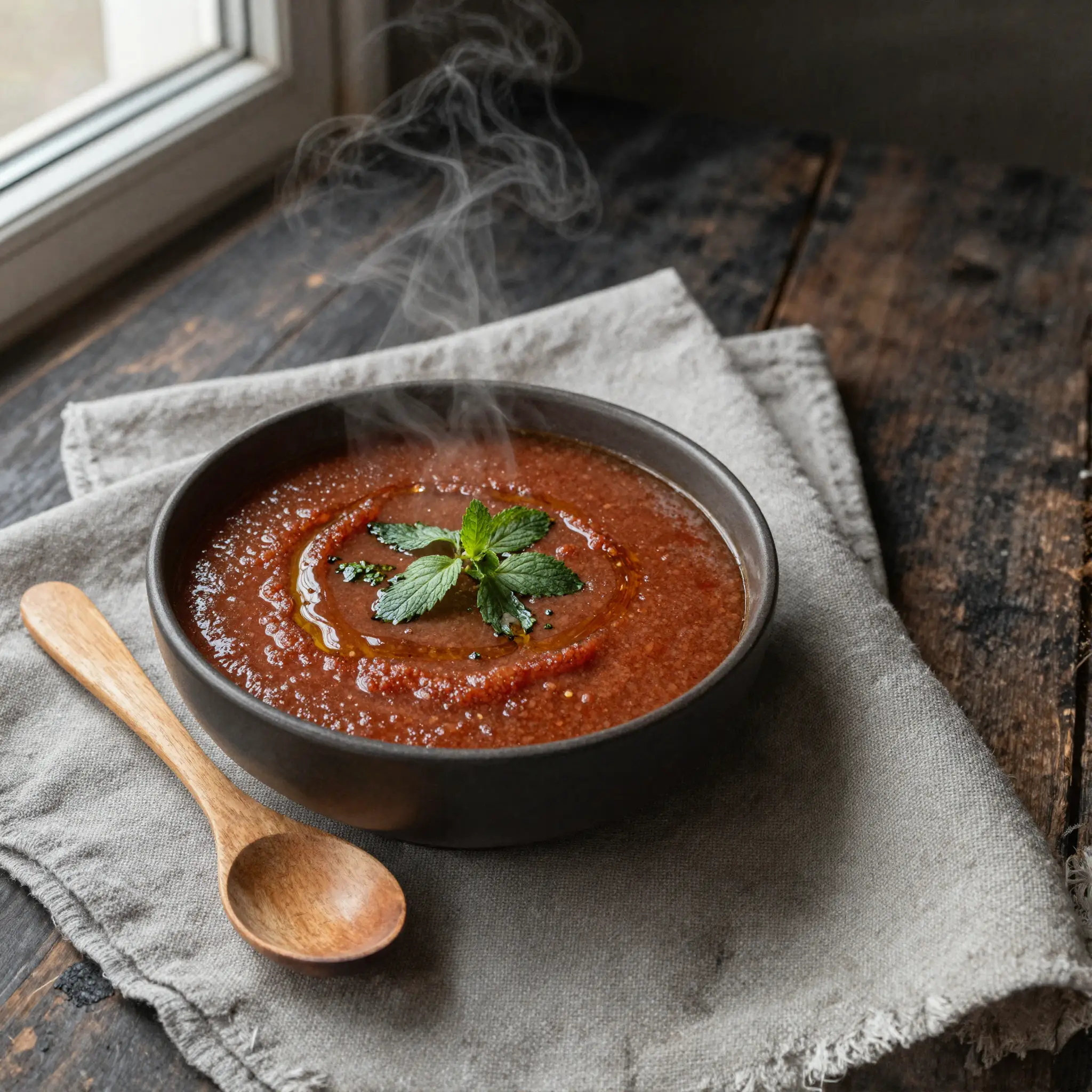
Tarhana
Soup base/preserved staple
Facts
| Category | Other |
|---|---|
| Origin | 🇹🇷 Türkiye |
Safety
- No significant acute-hazard risk factors documented for properly-fermented-and-fully-dried tarhana. Safe-practice guidance:
(a) the defining safety-relevant step is thorough drying to a low final moisture content before storage — tarhana's traditional shelf-stability (historically stored through winter without refrigeration) depends on this drying step, not on the fermentation stage's acidity alone; incomplete drying risks mold growth during storage, a visually detectable and actionable spoilage indicator;
(b) the yogurt component's own safety considerations (pasteurized-milk-derived yogurt preferred) carry forward as an ingredient-level input control;
(c) this product is flagged as having comparatively thin, non-English-language-dominant safety literature relative to more internationally-studied ferments — the safety statement here is built on general food-preservation/drying-safety principles (low water activity as a preservation mechanism) rather than a tarhana-specific quantified study, and is recorded as such rather than presented with false precision.
Method
Tarhana (Fermented Wheat-and-Yogurt Dried Soup Base)
- Wheat flour (or fine bulgur) — 1000 g
- Yogurt — ~500 g, illustrative — this is the ferment's starter, not merely an ingredient (the LAB come from here)
- Tomato, red pepper, and onion, cooked down and puréed — ~500 g total, illustrative
- Salt — illustrative
- Optional: mint, dill, or other regional seasonings (flavour only, non-safety)
- 1
Step 1
Cook down the tomato, pepper, and onion, then purée them and let the purée cool.
- 2
Step 2
Combine the flour/bulgur, yogurt, cooled vegetable purée, salt, and seasonings into a stiff dough or thick mash.
- 3
Step 3
Cover the mass and leave it to ferment at ambient temperature for several days, as the yogurt's LAB sour the whole mixture.
- 4
Step 4
Knead or turn it once daily through the ferment.
- 5
Step 5
When pleasantly sour, spread the mass out thinly on cloth or trays.
- 6
Step 6
Sun-dry (or air-dry) thoroughly — this drying step is what makes tarhana shelf-stable; an incompletely dried tarhana is not a preserved product.
- 7
Step 7
Crumble and grind the fully dried sheets into a coarse powder.
- 8
Step 8
Store the dry powder in a sealed container; reconstitute in water or stock to make soup.
Frequently asked questions
- What is Tarhana?
- Soup base/preserved staple
- Where does Tarhana come from?
- Tarhana is traditionally made in Türkiye.
- Is Tarhana safe to make at home?
- No significant acute-hazard risk factors documented for properly-fermented-and-fully-dried tarhana. Safe-practice guidance:
(a) the defining safety-relevant step is thorough drying to a low final moisture content before storage — tarhana's traditional shelf-stability (historically stored through winter without refrigeration) depends on this drying step, not on the fermentation stage's acidity alone; incomplete drying risks mold growth during storage, a visually detectable and actionable spoilage indicator;
(b) the yogurt component's own safety considerations (pasteurized-milk-derived yogurt preferred) carry forward as an ingredient-level input control;
(c) this product is flagged as having comparatively thin, non-English-language-dominant safety literature relative to more internationally-studied ferments — the safety statement here is built on general food-preservation/drying-safety principles (low water activity as a preservation mechanism) rather than a tarhana-specific quantified study, and is recorded as such rather than presented with false precision.
Community results
No community results published for this ferment yet.