
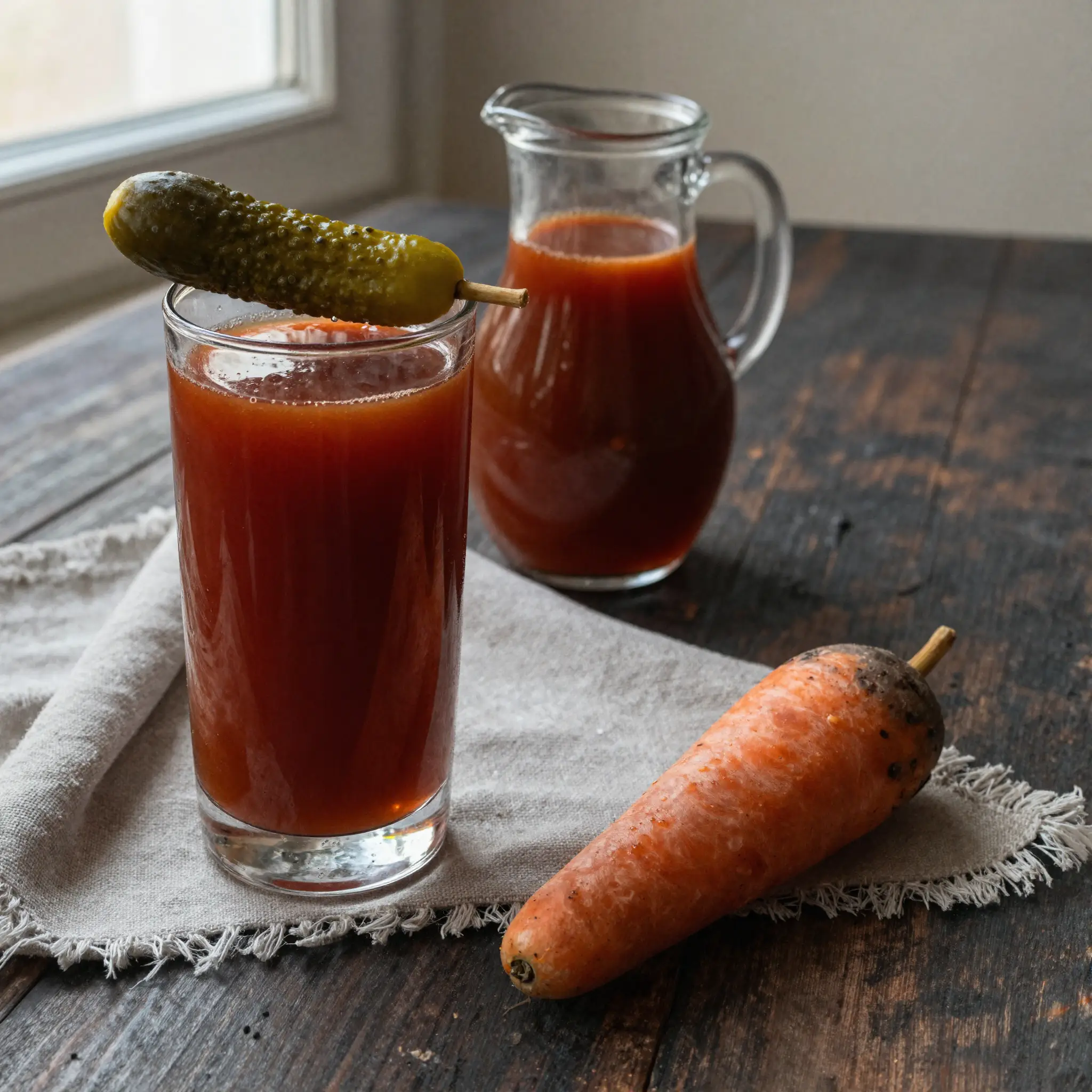
Şalgam
Beverage
Facts
| Category | Vegetable |
|---|---|
| Origin | 🇹🇷 Türkiye |
Safety
- No significant acute-hazard risk factors documented for traditionally-prepared şalgam, consistent with the general spontaneous-lactic-vegetable-fermentation safety profile that this product's mechanism follows. Safe-practice guidance:
(a) the same general principles as sauerkraut/kimchi apply — adequate salt concentration and anaerobic/reduced-air conditions during the fermentation period, though şalgam-specific quantified salinity thresholds were not identified as a distinct, separately-studied data point (the product is treated here as inheriting the general lactic-vegetable-fermentation safety principle rather than having its own dedicated safety literature);
(b) commercial şalgam production in Turkey is an established, regulated beverage category, which is itself indirect evidence of an established safety track record, though there is no single specific regulatory source published for this.
Method
Şalgam (Fermented Black-Carrot and Turnip Beverage)
- Black carrot, cut into pieces — 1000 g
- Turnip, cut into pieces — ~500 g, illustrative
- Bulgur flour — ~100 g, illustrative (traditional; contributes to the mash fermentation)
- Non-iodized salt — SAFETY CONTROL, see linked Variant; quantity illustrative
- Water — enough to cover (~3 L, illustrative)
- Optional: hot pepper, for the acılı (spicy) style (flavour only, non-safety)
- 1
Step 1
Wash and cut the black carrot and turnip.
- 2
Step 2
Combine the vegetables, bulgur flour, and salt in a clean vessel.
- 3
Step 3
Add water to cover everything fully.
- 4
Step 4
Keep the solids submerged below the liquid — SAFETY CONTROL (anaerobic), see linked Variant.
- 5
Step 5
Cover and ferment at ambient temperature for roughly 1–2 weeks, as the ambient LAB sour the mash.
- 6
Step 6
Check periodically: confirm submersion and skim any surface film.
- 7
Step 7
Taste from around the end of the first week; the finished drink is sour, salty, and deep purple.
- 8
Step 8
Strain the liquid off the solids — the strained liquid is the product; the spent vegetables are not.
- 9
Step 9
Refrigerate.
Frequently asked questions
- What is Şalgam?
- Beverage
- Where does Şalgam come from?
- Şalgam is traditionally made in Türkiye.
- Is Şalgam safe to make at home?
- No significant acute-hazard risk factors documented for traditionally-prepared şalgam, consistent with the general spontaneous-lactic-vegetable-fermentation safety profile that this product's mechanism follows. Safe-practice guidance:
(a) the same general principles as sauerkraut/kimchi apply — adequate salt concentration and anaerobic/reduced-air conditions during the fermentation period, though şalgam-specific quantified salinity thresholds were not identified as a distinct, separately-studied data point (the product is treated here as inheriting the general lactic-vegetable-fermentation safety principle rather than having its own dedicated safety literature);
(b) commercial şalgam production in Turkey is an established, regulated beverage category, which is itself indirect evidence of an established safety track record, though there is no single specific regulatory source published for this.
Community results
No community results published for this ferment yet.