
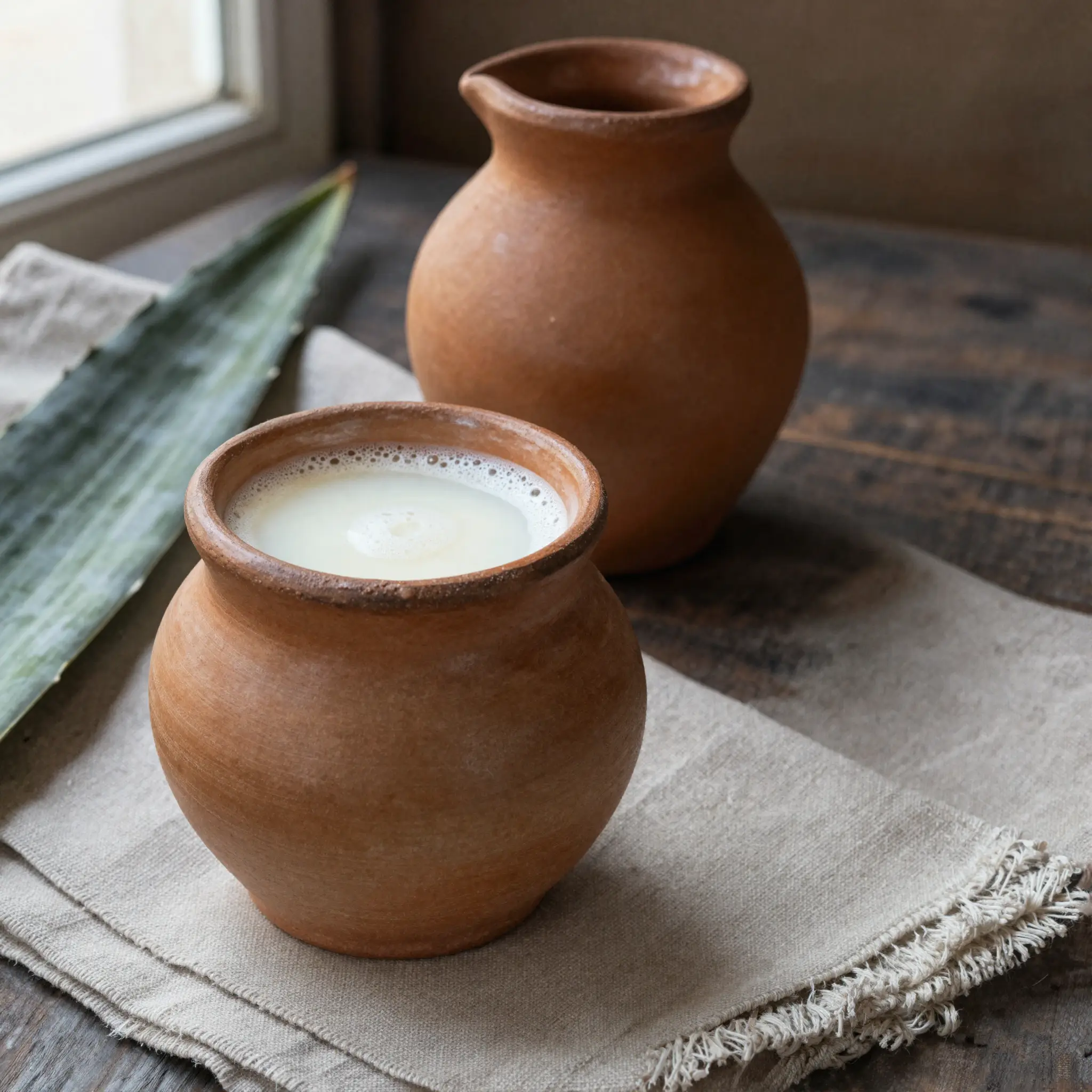
Pulque
Alcoholic beverage
Facts
| Category | Beverage |
|---|---|
| Origin | 🇲🇽 Mexico |
Safety
- No significant acute-hazard risk factors documented for traditionally-produced, freshly-consumed pulque. Safe-practice guidance:
(a) pulque's short shelf-life and continued active fermentation after production is itself the primary practical/safety-adjacent consideration — traditional practice emphasizes fresh, prompt consumption rather than extended storage, since the product's quality (and, plausibly though not separately documented, its microbial-safety profile as competing spoilage organisms could gain ground in an aging, low-alcohol, non-pasteurized product) degrades with time;
(b) as an open-vat, traditionally-produced, unpasteurized beverage, standard hygiene practice in production (clean tapping/collection equipment, prompt fermentation start) is a general good-practice note rather than a documented specific numeric threshold;
(c) alcohol content is typically low-to-moderate (roughly comparable to beer, though variable) and should be disclosed.
Method
Pulque (Fermented Agave Sap)
- Aguamiel (agave/maguey sap) — 5 L. Obtaining aguamiel requires tapping a mature maguey plant — a specialised agricultural skill with its own plant-selection and tapping knowledge that this recipe does not attempt to teach. The catalogue documents the ferment, not the tapping craft.
- Semilla (a back-slopped portion of a previous active pulque) — illustrative; optional, as this ferment is documented as spontaneous OR back-slopped
- 1
Step 1
Tap the maguey core and collect the aguamiel (see the ingredient note above — the tapping itself is outside this recipe's scope).
- 2
Step 2
Strain the collected sap of plant debris.
- 3
Step 3
Transfer it to a clean fermentation vessel — traditionally an open vat.
- 4
Step 4
Add the semilla back-slop, if using; otherwise the sap's own ambient microbiota starts it.
- 5
Step 5
Ferment at ambient temperature, traditionally open, for roughly 1–2 days.
- 6
Step 6
Watch for the primary ferment to complete: it turns viscous, white, and sour-sweet, with a distinctive slightly-ropy body.
- 7
Step 7
Drink it fresh. Pulque is not a keeping product — it keeps fermenting and changing continuously and is traditionally consumed within days of the ferment completing.
Frequently asked questions
- What is Pulque?
- Alcoholic beverage
- Where does Pulque come from?
- Pulque is traditionally made in Mexico.
- Is Pulque safe to make at home?
- No significant acute-hazard risk factors documented for traditionally-produced, freshly-consumed pulque. Safe-practice guidance:
(a) pulque's short shelf-life and continued active fermentation after production is itself the primary practical/safety-adjacent consideration — traditional practice emphasizes fresh, prompt consumption rather than extended storage, since the product's quality (and, plausibly though not separately documented, its microbial-safety profile as competing spoilage organisms could gain ground in an aging, low-alcohol, non-pasteurized product) degrades with time;
(b) as an open-vat, traditionally-produced, unpasteurized beverage, standard hygiene practice in production (clean tapping/collection equipment, prompt fermentation start) is a general good-practice note rather than a documented specific numeric threshold;
(c) alcohol content is typically low-to-moderate (roughly comparable to beer, though variable) and should be disclosed.
Community results
No community results published for this ferment yet.