
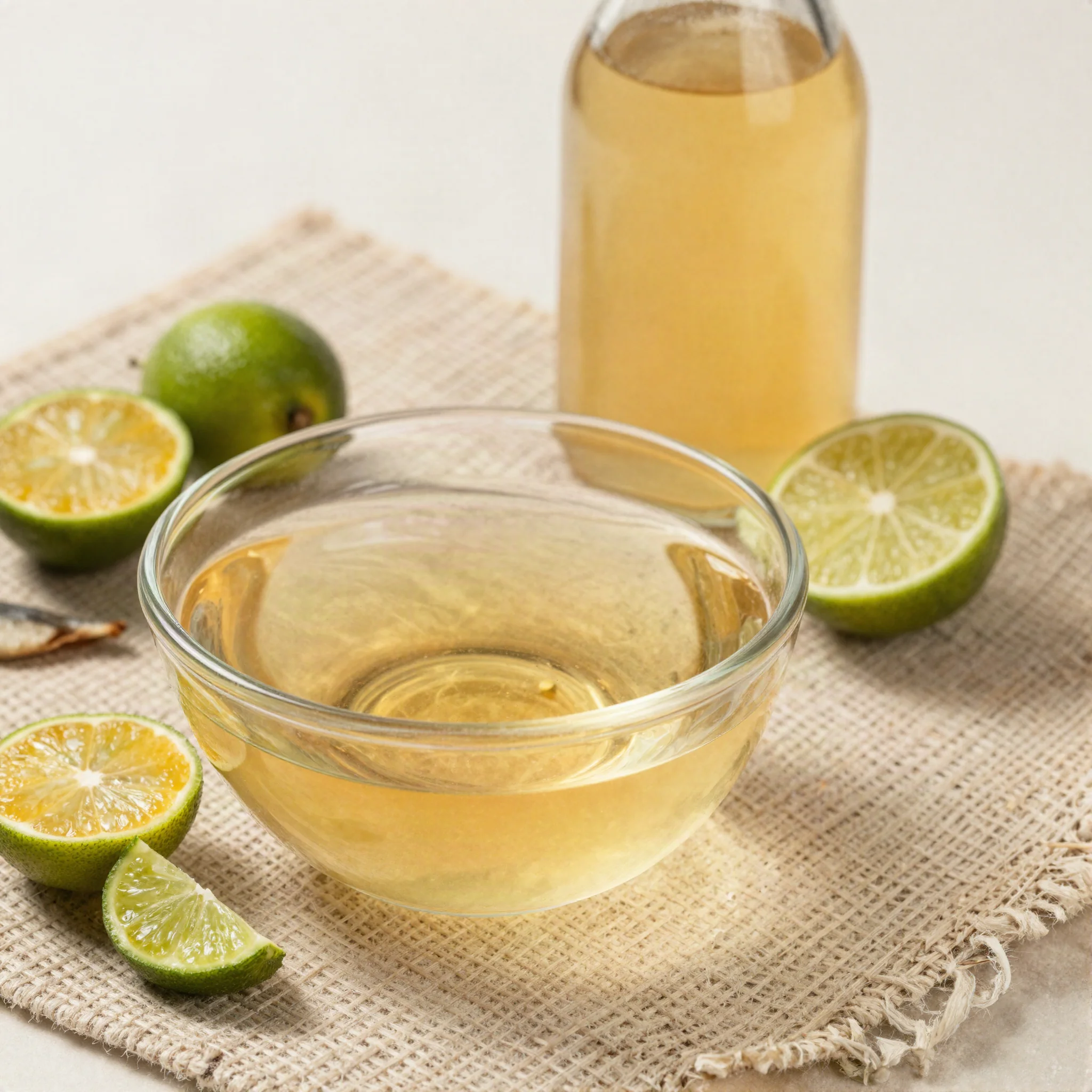
Patis (Philippine fish sauce)
Condiment/liquid seasoning
Facts
| Category | Meat / Fish |
|---|---|
| Product family | Southeast Asian Fish Sauce |
| Origin | 🇵🇭 Philippines |
| Key microorganisms | halophilic-other |
Safety
- Fermented fish is a high-hazard class; safety rests on salt and time, not fermentation alone.
(a) Histamine / scombroid poisoning — the defining hazard of fermented fish condiments. The small fish used for bagoong are histidine-rich; decarboxylating bacteria convert histidine to histamine whenever fish is not fresh or is temperature-abused before/during salting. Histamine is heat-stable and is NOT destroyed by cooking — patis stirred into a simmering dish carries it through intact, so the hazard cannot be cooked away. Freshness and prompt salting are the only effective controls; the illness is toxic (flushing, headache, GI symptoms), not infectious.
(b) Clostridium botulinum type E — the fish-associated, cold-tolerant type: it grows at fridge temperatures that suppress types A/B, so chilling is not a control. A packed, sealed, anaerobic salted-fish mass is its niche; salt is the hurdle that holds it.
(c) Salt concentration is the primary preservation hurdle; under-salting is the central failure mode — here upstream, in the bagoong ferment: patis inherits the paste's salt regime, so an under-salted bagoong yields an unsafe patis and the control point sits before the liquid is drawn.
(d) Parasites in raw fish — marine fish can carry parasites (e.g. anisakids); the control is the sustained high-salt, long-duration regime (plus prior freezing in modern practice), not the fermentation itself.
(e) Listeria monocytogenes and Salmonella — decanting, filtering and bottling are post-fermentation recontamination opportunities, and patis is used uncooked (calamansi-chilli dips): potable water, clean equipment, cool closed storage.
(f) Allergen: fish. Patis is a fish product, unsafe for people with fish allergy; where drawn from shrimp/krill bagoong (alamang) a crustacean allergen may also be present. It is used invisibly — in adobo, sinigang and dips where no fish is visible — a hidden-allergen exposure that must be declared. Safe-practice guidance: patis's safety is decided upstream in the bagoong fermentation — fresh fish, salted at once, never below the traditional salt proportion; decant and bottle with clean equipment and potable water; discard any putrid, gassing or discoloured batch; treat bottled product as ready-to-eat. Home production is not advised without authority-grade guidance. Numerics. Presented in two registers, and every figure carries the jurisdiction it comes from. ① Commercial-standard numerics — what a regulated fish sauce must meet. Informational. These are not instructions to a home fermenter. - Histamine ≤ 400 mg/kg. Codex Alimentarius CXS 302-2011 (Amendment 2012, 2013), clause 6.4: "The product shall not contain more than 40 mg histamine /100g of fish sauce in any sample unit tested", determined by AOAC 977.13. The European Union sets the identical value independently: Regulation (EC) 2073/2005 Annex I chapter 1, category 1.27a, "Fish sauce produced by fermentation of fishery products" — one sample unit, limit 400 mg/kg, method EN ISO 19343, applied to product on the market during its shelf-life (inserted by Regulation (EU) 1019/2013). Two bodies drafting separately reached the same number, and that convergence is stronger evidence than either citation alone. - Salt ≥ 200 g/l, calculated as NaCl — Codex CXS 302-2011, clause 3.4. - Total nitrogen ≥ 10 g/l, and amino-acid nitrogen ≥ 40 % of total nitrogen — same clause; a competent authority may specify a lower total-nitrogen level. - pH 5.0 – 6.5 is typical for a traditional product, and not below 4.5 where ingredients are used to assist fermentation — same clause. It must be measured on a 1:10 water dilution; a pH read on undiluted sauce is not comparable to this standard. - Fermentation generally takes not less than 6 months — Codex CXS 302-2011, clause 2.2. That is the standard's process definition rather than a safety limit, and should not be presented as one. - Scope boundary: CXS 302-2011 does not apply to fish sauce produced by acid hydrolysis — the same boundary drawn above. - The United States 50 ppm histamine figure does not belong here. It is a fresh-fish screening guidance level set for sampling reasons (FDA Fish and Fishery Products Hazards and Controls Guidance, 4th edition, 2022), not a limit for fermented products, and it sits a factor of eight below the figure that actually governs this product. ② Home-scale guidance — actionable. - Salt is the hurdle, and it is not the dial to adjust. The Codex figure of at least 200 g/l in the finished product is the level a traditional sauce reaches. Reducing salt for palatability removes the one barrier standing between a sealed, months-long, raw-protein mass and anaerobic pathogen growth. The FDA hazards guidance records that at least 20 % water-phase salt prevents growth of Clostridium botulinum types A, B, E and F — the traditional regime sits well above that threshold, which is why it works. - Clostridium botulinum type E grows at 3.3 °C, that is, at refrigerator temperature, where type A needs 10 °C. Chilling is not a control for this product. Salt is. - Histamine is decided before the salt goes on. It forms when fish is stale or temperature-abused prior to salting, it is heat-stable, and it cannot be cooked out later. There is no corrective step: fresh fish, salted promptly, or not at all. - The fish-to-salt input ratio is still (illustrative). Codex regulates the salt concentration of the finished product, not the input ratio, so no authority-grade ratio is available to publish. Still not established: the product-specific fish-to-salt input ratio, and the Vietnamese, Thai and Philippine national standards, which may be stricter than Codex in their own markets and would then be the figure a reader in those countries is actually governed by.
Method
Patis (Philippine fish sauce, drawn from bagoong)
- Bagoong (the fermented fish or krill/shrimp paste this sauce is drawn from) — the whole ferment; patis is the liquid that separates from it. See the bagoong recipe for its own quantities: ~3 kg raw fish or krill to ~1 kg salt (illustrative; the family convention is 3 parts fish to 1 part salt by weight — the direction matters, it is three times as much fish as salt). This proportion is the sole preservation control across the whole ferment and must not be reduced for palatability.
- Salt — SAFETY CONTROL, applied upstream in the bagoong. Patis inherits whatever salt regime the paste was made at, so the control point sits before the liquid is ever drawn: an under-salted bagoong yields an unsafe patis, and nothing done at the bottling stage can repair it.
- Check against the finished product, not just the input. Codex Alimentarius CXS 302-2011 requires fish sauce to carry not less than 200 g/l salt (as NaCl), with total nitrogen not less than 10 g/l and pH between 5.0 and 6.5. That is the number the finished sauce must actually reach, and it is checkable in a way an input ratio is not.
- (no starter — spontaneous: endogenous proteases plus ambient halophilic bacteria)
- Vessel: the bagoong fermentation jar/vat, plus clean filtration and bottling equipment and potable water
- Yield note: patis is a co-product, not a separate batch — the volume drawn depends on the paste and is small relative to it.
- 1
Step 1
Fresh fish or krill is heavily salted and packed to ferment as bagoong; freshness and salt proportion are fixed at this step and cannot be corrected later.
- 2
Step 2
The packed paste matures at warm ambient temperature over an extended period. (Duration (illustrative); no value asserted.)
- 3
Step 3
As maturation proceeds, a clear amber liquid separates from the paste — rising above it or draining from it.
- 4
Step 4
Draw off / decant that liquid: this is patis. The remaining paste continues as bagoong. (Timing of the draw: not established; not documented in our sources.)
- 5
Step 5
Filter the drawn liquid with clean equipment.
- 6
Step 6
Age briefly for flavour development where the tradition or producer does so.
- 7
Step 7
Bottle into clean containers; store closed and cool.
Frequently asked questions
- What is Patis (Philippine fish sauce)?
- Condiment/liquid seasoning
- Which microorganisms ferment Patis (Philippine fish sauce)?
- Patis (Philippine fish sauce) is primarily driven by halophilic-other.
- Where does Patis (Philippine fish sauce) come from?
- Patis (Philippine fish sauce) is traditionally made in Philippines.
- Is Patis (Philippine fish sauce) safe to make at home?
- Fermented fish is a high-hazard class; safety rests on salt and time, not fermentation alone.
(a) Histamine / scombroid poisoning — the defining hazard of fermented fish condiments. The small fish used for bagoong are histidine-rich; decarboxylating bacteria convert histidine to histamine whenever fish is not fresh or is temperature-abused before/during salting. Histamine is heat-stable and is NOT destroyed by cooking — patis stirred into a simmering dish carries it through intact, so the hazard cannot be cooked away. Freshness and prompt salting are the only effective controls; the illness is toxic (flushing, headache, GI symptoms), not infectious.
(b) Clostridium botulinum type E — the fish-associated, cold-tolerant type: it grows at fridge temperatures that suppress types A/B, so chilling is not a control. A packed, sealed, anaerobic salted-fish mass is its niche; salt is the hurdle that holds it.
(c) Salt concentration is the primary preservation hurdle; under-salting is the central failure mode — here upstream, in the bagoong ferment: patis inherits the paste's salt regime, so an under-salted bagoong yields an unsafe patis and the control point sits before the liquid is drawn.
(d) Parasites in raw fish — marine fish can carry parasites (e.g. anisakids); the control is the sustained high-salt, long-duration regime (plus prior freezing in modern practice), not the fermentation itself.
(e) Listeria monocytogenes and Salmonella — decanting, filtering and bottling are post-fermentation recontamination opportunities, and patis is used uncooked (calamansi-chilli dips): potable water, clean equipment, cool closed storage.
(f) Allergen: fish. Patis is a fish product, unsafe for people with fish allergy; where drawn from shrimp/krill bagoong (alamang) a crustacean allergen may also be present. It is used invisibly — in adobo, sinigang and dips where no fish is visible — a hidden-allergen exposure that must be declared. Safe-practice guidance: patis's safety is decided upstream in the bagoong fermentation — fresh fish, salted at once, never below the traditional salt proportion; decant and bottle with clean equipment and potable water; discard any putrid, gassing or discoloured batch; treat bottled product as ready-to-eat. Home production is not advised without authority-grade guidance. Numerics. Presented in two registers, and every figure carries the jurisdiction it comes from. ① Commercial-standard numerics — what a regulated fish sauce must meet. Informational. These are not instructions to a home fermenter. - Histamine ≤ 400 mg/kg. Codex Alimentarius CXS 302-2011 (Amendment 2012, 2013), clause 6.4: "The product shall not contain more than 40 mg histamine /100g of fish sauce in any sample unit tested", determined by AOAC 977.13. The European Union sets the identical value independently: Regulation (EC) 2073/2005 Annex I chapter 1, category 1.27a, "Fish sauce produced by fermentation of fishery products" — one sample unit, limit 400 mg/kg, method EN ISO 19343, applied to product on the market during its shelf-life (inserted by Regulation (EU) 1019/2013). Two bodies drafting separately reached the same number, and that convergence is stronger evidence than either citation alone. - Salt ≥ 200 g/l, calculated as NaCl — Codex CXS 302-2011, clause 3.4. - Total nitrogen ≥ 10 g/l, and amino-acid nitrogen ≥ 40 % of total nitrogen — same clause; a competent authority may specify a lower total-nitrogen level. - pH 5.0 – 6.5 is typical for a traditional product, and not below 4.5 where ingredients are used to assist fermentation — same clause. It must be measured on a 1:10 water dilution; a pH read on undiluted sauce is not comparable to this standard. - Fermentation generally takes not less than 6 months — Codex CXS 302-2011, clause 2.2. That is the standard's process definition rather than a safety limit, and should not be presented as one. - Scope boundary: CXS 302-2011 does not apply to fish sauce produced by acid hydrolysis — the same boundary drawn above. - The United States 50 ppm histamine figure does not belong here. It is a fresh-fish screening guidance level set for sampling reasons (FDA Fish and Fishery Products Hazards and Controls Guidance, 4th edition, 2022), not a limit for fermented products, and it sits a factor of eight below the figure that actually governs this product. ② Home-scale guidance — actionable. - Salt is the hurdle, and it is not the dial to adjust. The Codex figure of at least 200 g/l in the finished product is the level a traditional sauce reaches. Reducing salt for palatability removes the one barrier standing between a sealed, months-long, raw-protein mass and anaerobic pathogen growth. The FDA hazards guidance records that at least 20 % water-phase salt prevents growth of Clostridium botulinum types A, B, E and F — the traditional regime sits well above that threshold, which is why it works. - Clostridium botulinum type E grows at 3.3 °C, that is, at refrigerator temperature, where type A needs 10 °C. Chilling is not a control for this product. Salt is. - Histamine is decided before the salt goes on. It forms when fish is stale or temperature-abused prior to salting, it is heat-stable, and it cannot be cooked out later. There is no corrective step: fresh fish, salted promptly, or not at all. - The fish-to-salt input ratio is still (illustrative). Codex regulates the salt concentration of the finished product, not the input ratio, so no authority-grade ratio is available to publish. Still not established: the product-specific fish-to-salt input ratio, and the Vietnamese, Thai and Philippine national standards, which may be stricter than Codex in their own markets and would then be the figure a reader in those countries is actually governed by.
Community results
No community results published for this ferment yet.