
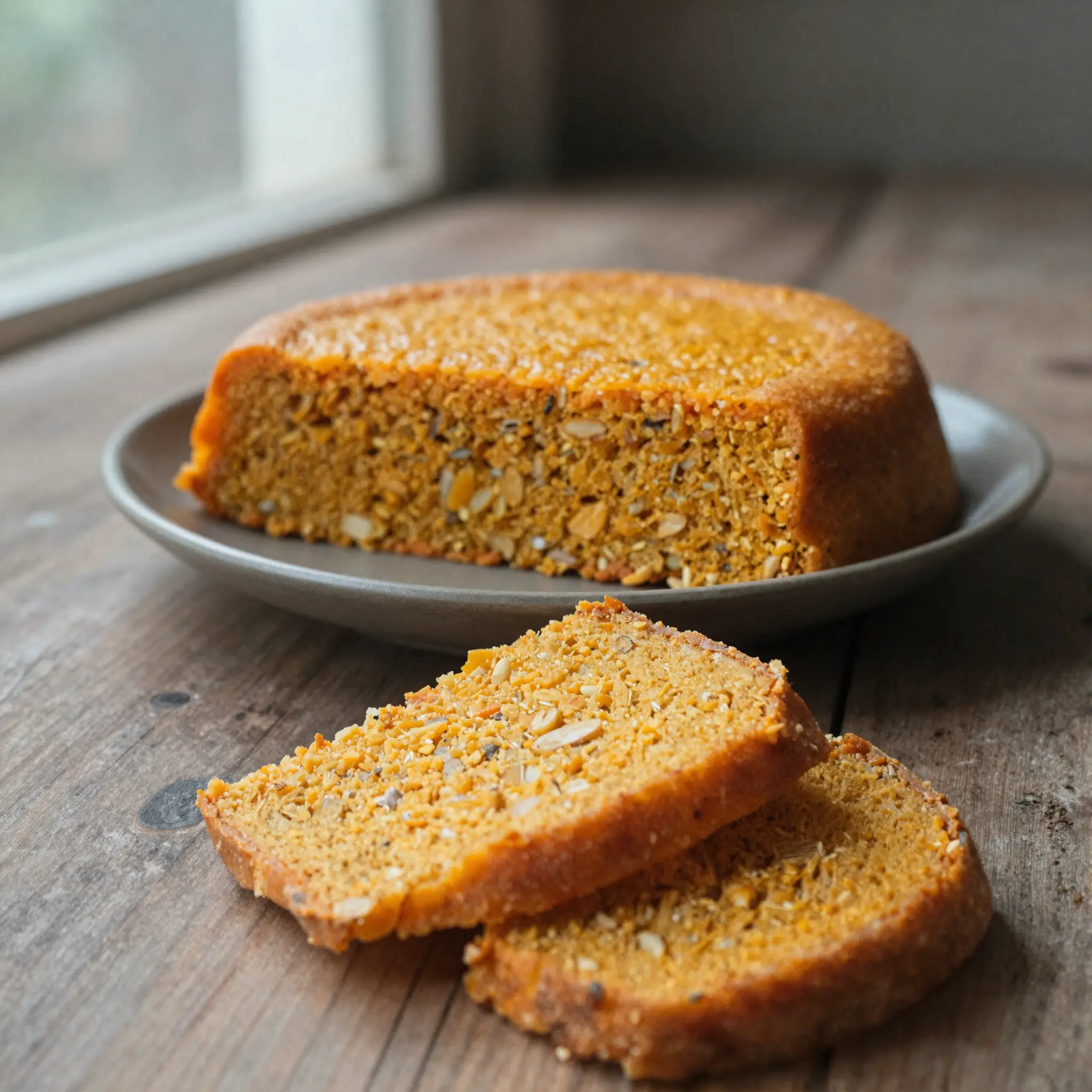
Oncom (Indonesian/West Javanese mold-fermented peanut press-cake or okara)
Legume ferment/staple
Facts
| Category | Grain / Legume |
|---|---|
| Product family | Indonesian mold-fermented legume-byproduct press-cake family |
| Origin | 🇮🇩 Indonesia |
| Key microorganisms | filamentous-fungi-molds |
Safety
- Documented considerations:
(a) the mold-species-discrimination principle central to tempeh safety applies equally here: verified/traceable spore inoculum (whether Neurospora intermedia for orange oncom or Rhizopus for black oncom) rather than uncontrolled wild capture is the safer practice, since the broader ambient mould environment includes contaminating and potentially harmful species not intended for the ferment;
(b) the intended-mould-vs-spoilage distinction is genuinely important: a fully bound, dense mycelial mat with the expected colour (orange-red for Neurospora, dark grey-black for Rhizopus) is the safety-relevant completion indicator, while any patches of unexpected colour (e.g., green, which typically signals contaminating Aspergillus or Penicillium species rather than the intended mould), or a foul, putrid, or clearly off odour beyond the product's normal earthy/mould aroma, indicate contamination, and the batch should be discarded;
(c) peanut-substrate aflatoxin/mould-safety consideration (honest, traditional-understanding framing): peanuts and peanut byproducts are a well-known general substrate risk for aflatoxigenic mould contamination (e.g., certain Aspergillus species) if improperly stored before processing; traditional understanding in Indonesian food practice holds that the specific fermentation of peanut press-cake by Neurospora intermedia (orange oncom) helps suppress aflatoxigenic mould growth on the substrate during the fermentation process — this entry describes this as a traditional understanding documented in general food-ethnography and food-science discussion of oncom, not as a quantified, regulatory-grade safety guarantee; no specific aflatoxin concentration, reduction percentage, or safety-threshold figure is asserted, and this does not substitute for sourcing peanut press-cake/okara from mould-free, properly stored raw material in the first place;
(d) allergen note: oncom made from peanut press-cake carries a peanut allergen risk; oncom made from okara carries a soy allergen risk — the two substrate variants (peanut press-cake vs. okara) should be clearly distinguished for allergen-disclosure purposes, as they are materially different allergen profiles;
(e) the finished cake is conventionally cooked (fried, grilled, or added to a cooked dish) before eating, which further heat-treats the product. Safe-practice guidance: use verified spore starter or well-established traditional ambient-inoculation practice appropriate to the intended mould (Neurospora for orange oncom, Rhizopus for black oncom); source peanut press-cake/okara from properly stored, mould-free raw material — do not rely on fermentation alone as an aflatoxin-safety substitute; confirm a fully bound mycelial mat of the expected colour as the completion indicator, discarding any batch with unexpected colour patches or foul/putrid off-odour; disclose the peanut-vs-okara substrate distinction clearly for allergen purposes; cook the finished cake before eating per standard practice. No specific pathogen thresholds, pH figures, aflatoxin concentrations, or fermentation-duration numerics are asserted — any such figure is illustrative or not established.
Method
Oncom (Indonesian/West Javanese Mold-Fermented Peanut Press-Cake or Okara)
- Peanut press-cake (byproduct of peanut-oil pressing) or okara (soybean pulp byproduct of tofu/soy-milk production) — ~500 g
- Water — potable, sufficient for moistening the press-cake/okara
- Mold spore starter — Neurospora intermedia spores (for orange oncom) or Rhizopus spores (for black oncom); traditional ambient/inherited inoculum from a prior batch is also documented practice
- 1
Step 1
Prepare the peanut press-cake or okara, ensuring it is free of visible mould, discoloration, or off-odour from prior storage.
- 2
Step 2
Moisten the substrate with potable water as needed and form into a flattened cake or block.
- 3
Step 3
Inoculate with the intended mould spore starter (Neurospora intermedia for orange oncom, or Rhizopus for black oncom), or apply traditional ambient/inherited inoculum.
- 4
Step 4
Pack the inoculated cake, allowing airflow appropriate to mold growth.
- 5
Step 5
Incubate warm (typically ~1–2 days, illustrative, tradition- and household-variable) until fully bound by dense mycelium and displaying the expected colour — orange-red for Neurospora, dark grey-black for Rhizopus.
- 6
Step 6
Inspect for the expected colour and mycelial binding; discard any batch with unexpected colour patches (e.g., green) or foul/off-odour.
- 7
Step 7
Slice the finished cake and cook (fry, grill, or add to a soup/dish) before eating.
Frequently asked questions
- What is Oncom (Indonesian/West Javanese mold-fermented peanut press-cake or okara)?
- Legume ferment/staple
- Which microorganisms ferment Oncom (Indonesian/West Javanese mold-fermented peanut press-cake or okara)?
- Oncom (Indonesian/West Javanese mold-fermented peanut press-cake or okara) is primarily driven by filamentous-fungi-molds.
- Where does Oncom (Indonesian/West Javanese mold-fermented peanut press-cake or okara) come from?
- Oncom (Indonesian/West Javanese mold-fermented peanut press-cake or okara) is traditionally made in Indonesia.
- Is Oncom (Indonesian/West Javanese mold-fermented peanut press-cake or okara) safe to make at home?
- Documented considerations:
(a) the mold-species-discrimination principle central to tempeh safety applies equally here: verified/traceable spore inoculum (whether Neurospora intermedia for orange oncom or Rhizopus for black oncom) rather than uncontrolled wild capture is the safer practice, since the broader ambient mould environment includes contaminating and potentially harmful species not intended for the ferment;
(b) the intended-mould-vs-spoilage distinction is genuinely important: a fully bound, dense mycelial mat with the expected colour (orange-red for Neurospora, dark grey-black for Rhizopus) is the safety-relevant completion indicator, while any patches of unexpected colour (e.g., green, which typically signals contaminating Aspergillus or Penicillium species rather than the intended mould), or a foul, putrid, or clearly off odour beyond the product's normal earthy/mould aroma, indicate contamination, and the batch should be discarded;
(c) peanut-substrate aflatoxin/mould-safety consideration (honest, traditional-understanding framing): peanuts and peanut byproducts are a well-known general substrate risk for aflatoxigenic mould contamination (e.g., certain Aspergillus species) if improperly stored before processing; traditional understanding in Indonesian food practice holds that the specific fermentation of peanut press-cake by Neurospora intermedia (orange oncom) helps suppress aflatoxigenic mould growth on the substrate during the fermentation process — this entry describes this as a traditional understanding documented in general food-ethnography and food-science discussion of oncom, not as a quantified, regulatory-grade safety guarantee; no specific aflatoxin concentration, reduction percentage, or safety-threshold figure is asserted, and this does not substitute for sourcing peanut press-cake/okara from mould-free, properly stored raw material in the first place;
(d) allergen note: oncom made from peanut press-cake carries a peanut allergen risk; oncom made from okara carries a soy allergen risk — the two substrate variants (peanut press-cake vs. okara) should be clearly distinguished for allergen-disclosure purposes, as they are materially different allergen profiles;
(e) the finished cake is conventionally cooked (fried, grilled, or added to a cooked dish) before eating, which further heat-treats the product. Safe-practice guidance: use verified spore starter or well-established traditional ambient-inoculation practice appropriate to the intended mould (Neurospora for orange oncom, Rhizopus for black oncom); source peanut press-cake/okara from properly stored, mould-free raw material — do not rely on fermentation alone as an aflatoxin-safety substitute; confirm a fully bound mycelial mat of the expected colour as the completion indicator, discarding any batch with unexpected colour patches or foul/putrid off-odour; disclose the peanut-vs-okara substrate distinction clearly for allergen purposes; cook the finished cake before eating per standard practice. No specific pathogen thresholds, pH figures, aflatoxin concentrations, or fermentation-duration numerics are asserted — any such figure is illustrative or not established.
Community results
No community results published for this ferment yet.