
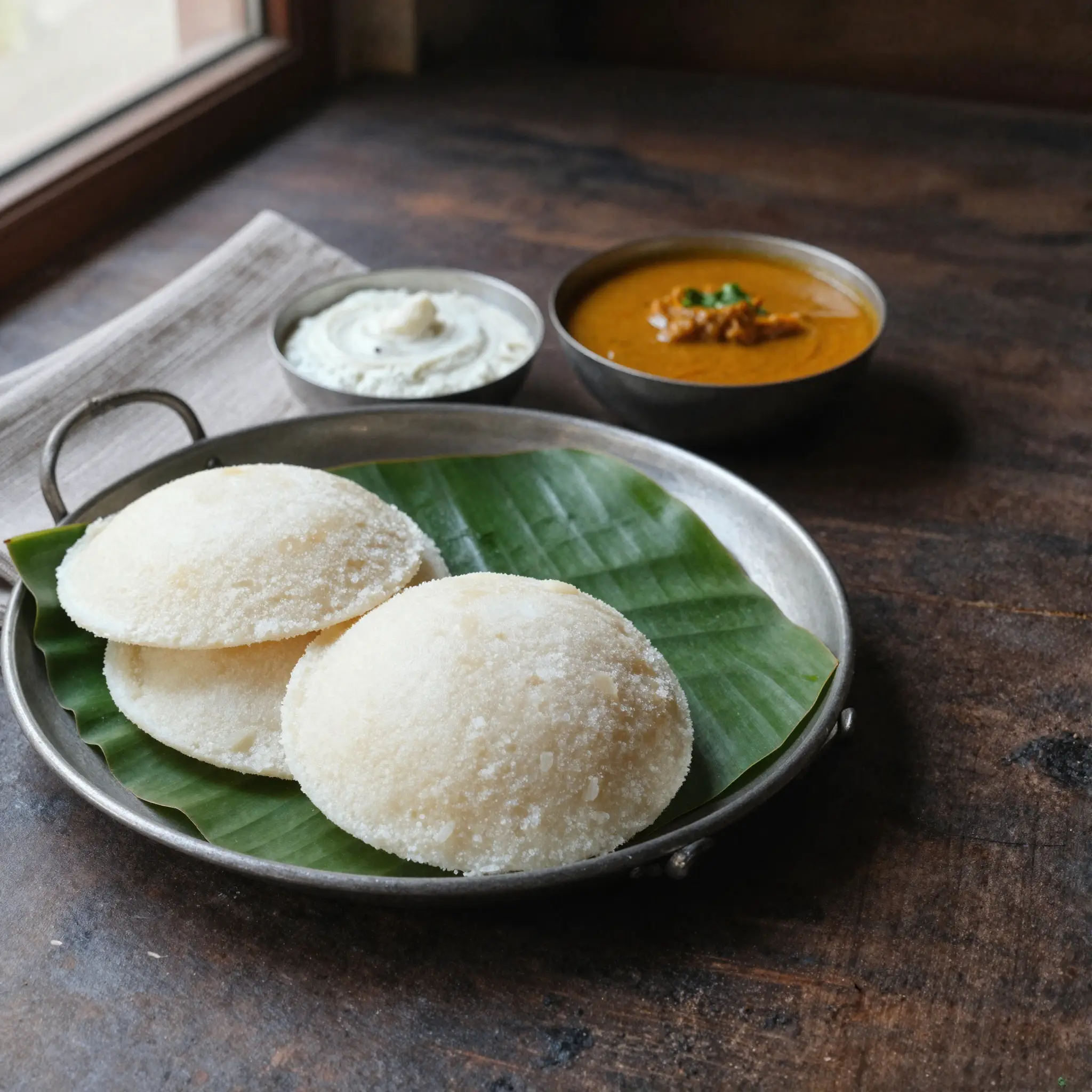
Idli/Dosa Batter
Idli/Dosa fermented batter
Staple/batter
Facts
| Category | Other |
|---|---|
| Origin | 🇮🇳 India |
Safety
- No significant acute-hazard risk factors documented for properly-fermented idli/dosa batter. Safe-practice guidance:
(a) adequate fermentation time and warm ambient temperature are primarily quality-determinative (proper rise/aeration, characteristic sour flavor) rather than acute-safety-critical in the way salinity is for vegetable ferments, since this is a short-duration, low-salt, cooked-before-consumption product (both idli and dosa are heat-processed after fermentation, providing an additional pathogen-inhibitory step not present in raw-consumed ferments);
(b) standard food hygiene (clean grinding equipment, potable water, reasonable ambient temperature control to avoid off-fermentation/spoilage odors) applies as general good practice rather than a documented acute hazard specific to this product.
Method
Idli / Dosa Batter (Fermented Rice and Urad Dal Batter)
- Rice — 600 g, illustrative (a conventional home ratio is roughly 3:1 rice to dal)
- Black gram (urad dal), skinned — 200 g, illustrative
- Water — for soaking and grinding
- Salt — illustrative
- Optional: fenugreek seeds, soaked with the dal (traditional; aids fermentation and browning)
- 1
Step 1
Rinse and soak the rice and the urad dal separately for several hours — they grind to different textures and are not interchangeable in this step.
- 2
Step 2
Grind the soaked dal to a smooth, light, aerated paste.
- 3
Step 3
Grind the soaked rice to a slightly coarser paste.
- 4
Step 4
Combine the two pastes and mix thoroughly by hand — the mixing incorporates air and distributes the ambient LAB that drive this spontaneous ferment.
- 5
Step 5
Add the salt and mix through.
- 6
Step 6
Cover and ferment at warm ambient temperature for 8–16 hours.
- 7
Step 7
The batter is ready when it has visibly risen and aerated and smells pleasantly sour — the LAB acidify while CO2 leavens it.
- 8
Step 8
Stir gently, then either steam portions in molds (idli) or spread thin on a hot griddle (dosa).
- 9
Step 9
Refrigerate any unused batter; it keeps fermenting and grows more sour.
Frequently asked questions
- What is Idli/Dosa Batter?
- Staple/batter
- Where does Idli/Dosa Batter come from?
- Idli/Dosa Batter is traditionally made in India.
- Is Idli/Dosa Batter safe to make at home?
- No significant acute-hazard risk factors documented for properly-fermented idli/dosa batter. Safe-practice guidance:
(a) adequate fermentation time and warm ambient temperature are primarily quality-determinative (proper rise/aeration, characteristic sour flavor) rather than acute-safety-critical in the way salinity is for vegetable ferments, since this is a short-duration, low-salt, cooked-before-consumption product (both idli and dosa are heat-processed after fermentation, providing an additional pathogen-inhibitory step not present in raw-consumed ferments);
(b) standard food hygiene (clean grinding equipment, potable water, reasonable ambient temperature control to avoid off-fermentation/spoilage odors) applies as general good practice rather than a documented acute hazard specific to this product.
Community results
No community results published for this ferment yet.