
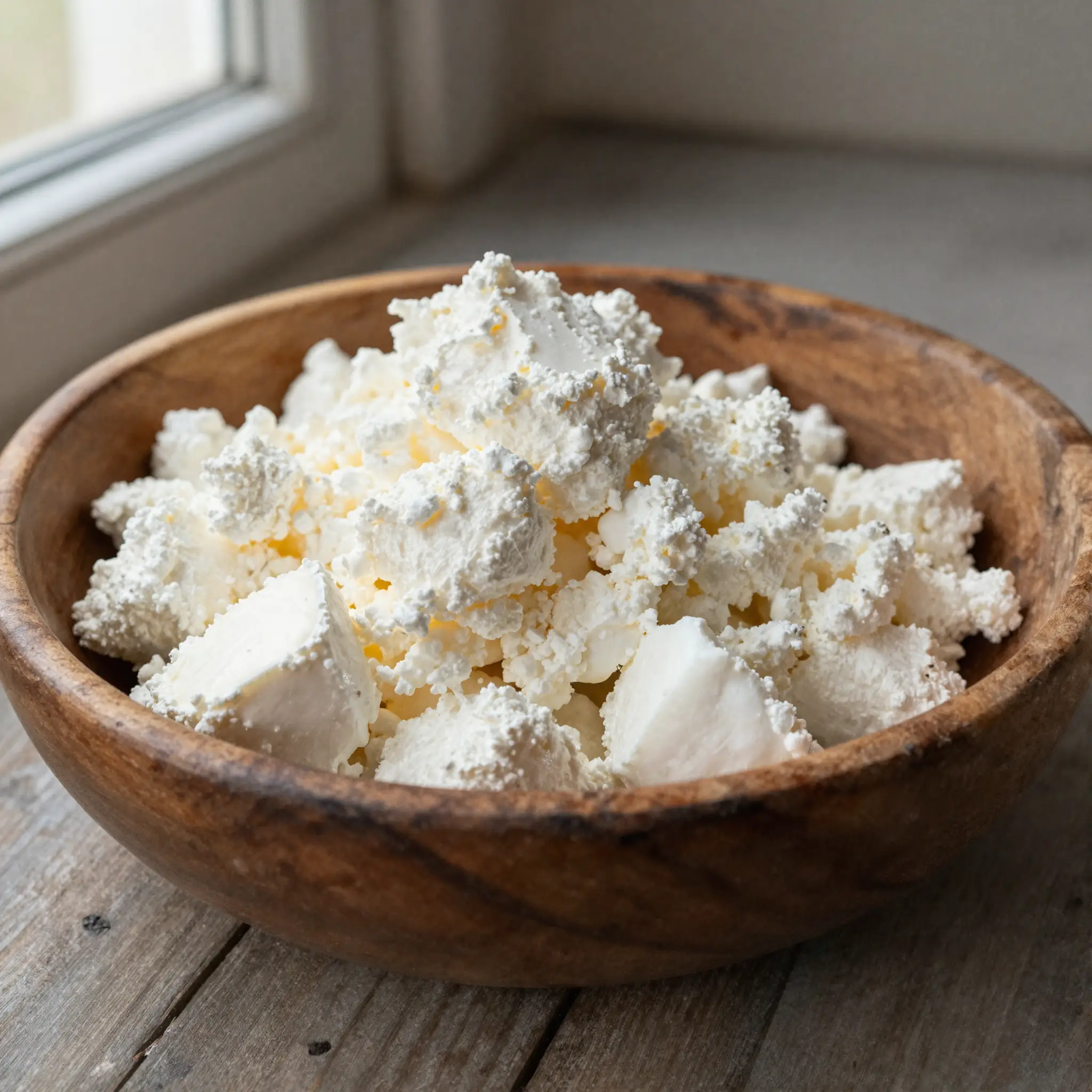
Bryndza (Slovak/Carpathian soft sheep's-milk cheese)
Dairy product
Facts
| Category | Dairy |
|---|---|
| Product family | Regional Soft Sheep's-Milk Cheese |
| Origin | 🇸🇰 Slovakia |
Safety
- Inherits the general dairy-lactic-and-rennet-cheese safety floor documented, with dairy-appropriate salting/brining and cheese-ripening-hygiene considerations specific to a soft, fresh-to-lightly-aged sheep's-milk cheese. Documented risk factors:
(a) raw-milk vs. pasteurized-milk considerations — as with all fresh/soft cheeses, starting from unpasteurized sheep's milk carries materially higher pathogen risk (e.g. Listeria, Salmonella, pathogenic E. coli) that is not reliably eliminated by acidification and rennet-coagulation alone within the short-to-moderate timeframes typical of a soft/fresh cheese, and this risk is generally considered more safety-load-bearing for soft/fresh cheeses than for long-aged hard cheeses, where extended aging and lower water activity provide an additional (though product- and time-specific, not universal) safety margin — bryndza, as a soft/fresh-to-lightly-aged cheese, sits on the higher-risk-profile side of that spectrum;
(b) adequate acidification — an intermediate "danger-zone" hold before the lactic culture and rennet establish the intended curd can allow competing/pathogenic organisms a foothold;
(c) salt/brine adequacy — bryndza's characteristic salting step contributes to both flavour and a degree of preservation/safety margin, and adequate, consistent salting is a genuine safety-relevant control point for a soft cheese stored beyond the very short term;
(d) cheese-handling/ripening hygiene — clean equipment and hands during curd-cutting, draining, salting, and any short ripening period are necessary to avoid introducing spoilage or pathogenic organisms alongside the intended LAB fermentation; bryndza's soft, fresh-to-lightly-aged character means it does not rely on a deliberate surface-mold ripening stage (unlike bloomy-rind cheeses), so any surface mould growth here is a spoilage signal, not an intended ripening trait;
(e) refrigeration — bryndza is a soft, perishable cheese and should be refrigerated. Safe-practice guidance: use pasteurized sheep's milk unless the raw-milk risk profile is explicitly accepted and understood (raw-milk soft cheeses carry a materially higher documented risk profile than raw-milk hard aged cheeses); maintain adequate, consistent salting; keep curd-handling equipment clean throughout cutting/draining/salting; refrigerate promptly and consume within a shorter window than a long-aged hard cheese; discard on off (putrid, not tangy) odour, unexpected surface mould (not part of bryndza's intended profile), or sliminess. All numerics are (illustrative) or not established where not documented; no regulatory-grade salt%/pH/temperature/duration thresholds are asserted beyond the general dairy-cheese family floor.
Method
Bryndza (Slovak/Carpathian Soft Sheep's-Milk Cheese)
- Sheep's milk (traditional primary substrate; some regional/commercial variants blend in cow's milk) — ~4–5 L (illustrative; cheese-making typically requires a larger milk volume relative to finished yield than a simple set-milk ferment)
- Lactic starter or back-slopped culture — illustrative quantity, per traditional/commercial practice, not independently specified in our sources — SAFETY CONTROL, see linked Variant
- Rennet — illustrative quantity, per manufacturer/traditional guidance — parallel coagulation mechanism, see linked Variant
- Salt — quantity for the salting step (illustrative, a defining flavour and preservation step for bryndza) — SAFETY CONTROL, see linked Variant
- 1
Step 1
Heat-treat the sheep's milk, then cool to the target incubation/coagulation temperature.
- 2
Step 2
Add the lactic starter/back-slopped culture and allow a brief acidification period.
- 3
Step 3
Add rennet and allow the milk to coagulate into a firm curd.
- 4
Step 4
Cut the curd into small pieces to encourage whey release.
- 5
Step 5
Drain the cut curd of whey (traditionally in cloth or a perforated mould).
- 6
Step 6
Salt the drained curd thoroughly and evenly.
- 7
Step 7
Press/shape the salted curd into its traditional soft, crumbly-to-spreadable form.
- 8
Step 8
Hold briefly at a cool temperature to allow the curd to firm slightly and the flavour to develop (bryndza is consumed fresh to lightly aged, not long-aged).
- 9
Step 9
Refrigerate; consume within the intended short-to-moderate shelf window for a soft cheese.
Frequently asked questions
- What is Bryndza (Slovak/Carpathian soft sheep's-milk cheese)?
- Dairy product
- Where does Bryndza (Slovak/Carpathian soft sheep's-milk cheese) come from?
- Bryndza (Slovak/Carpathian soft sheep's-milk cheese) is traditionally made in Slovakia.
- Is Bryndza (Slovak/Carpathian soft sheep's-milk cheese) safe to make at home?
- Inherits the general dairy-lactic-and-rennet-cheese safety floor documented, with dairy-appropriate salting/brining and cheese-ripening-hygiene considerations specific to a soft, fresh-to-lightly-aged sheep's-milk cheese. Documented risk factors:
(a) raw-milk vs. pasteurized-milk considerations — as with all fresh/soft cheeses, starting from unpasteurized sheep's milk carries materially higher pathogen risk (e.g. Listeria, Salmonella, pathogenic E. coli) that is not reliably eliminated by acidification and rennet-coagulation alone within the short-to-moderate timeframes typical of a soft/fresh cheese, and this risk is generally considered more safety-load-bearing for soft/fresh cheeses than for long-aged hard cheeses, where extended aging and lower water activity provide an additional (though product- and time-specific, not universal) safety margin — bryndza, as a soft/fresh-to-lightly-aged cheese, sits on the higher-risk-profile side of that spectrum;
(b) adequate acidification — an intermediate "danger-zone" hold before the lactic culture and rennet establish the intended curd can allow competing/pathogenic organisms a foothold;
(c) salt/brine adequacy — bryndza's characteristic salting step contributes to both flavour and a degree of preservation/safety margin, and adequate, consistent salting is a genuine safety-relevant control point for a soft cheese stored beyond the very short term;
(d) cheese-handling/ripening hygiene — clean equipment and hands during curd-cutting, draining, salting, and any short ripening period are necessary to avoid introducing spoilage or pathogenic organisms alongside the intended LAB fermentation; bryndza's soft, fresh-to-lightly-aged character means it does not rely on a deliberate surface-mold ripening stage (unlike bloomy-rind cheeses), so any surface mould growth here is a spoilage signal, not an intended ripening trait;
(e) refrigeration — bryndza is a soft, perishable cheese and should be refrigerated. Safe-practice guidance: use pasteurized sheep's milk unless the raw-milk risk profile is explicitly accepted and understood (raw-milk soft cheeses carry a materially higher documented risk profile than raw-milk hard aged cheeses); maintain adequate, consistent salting; keep curd-handling equipment clean throughout cutting/draining/salting; refrigerate promptly and consume within a shorter window than a long-aged hard cheese; discard on off (putrid, not tangy) odour, unexpected surface mould (not part of bryndza's intended profile), or sliminess. All numerics are (illustrative) or not established where not documented; no regulatory-grade salt%/pH/temperature/duration thresholds are asserted beyond the general dairy-cheese family floor.
Community results
No community results published for this ferment yet.