
Grain / Legume
Boza
Beverage
Facts
| Category | Grain / Legume |
|---|---|
| Origin | 🇹🇷 Türkiye |
Safety
- No significant acute-hazard risk factors documented for traditionally or commercially prepared boza. Safe-practice guidance:
(a) the mild alcoholic content (typically low, but present, since yeast fermentation is part of the process) should be disclosed — boza is traditionally consumed by broad age ranges in some regions specifically because its alcohol content is understood to be low/negligible in short-fermented versions, but this varies with fermentation duration and should not be presented as categorically zero-alcohol without product-specific testing;
(b) general grain-porridge-ferment safety principles (adequate cooking of the base grain, hygienic handling, refrigeration of the finished product given its low final acidity relative to more strongly acidified vegetable ferments) apply; boza is a relatively short-fermentation, refrigerated/quickly-consumed product rather than a long-shelf-stable one, which is itself a safety-relevant handling note.
Method
Boza (Fermented Millet Beverage)
- Millet (traditional), or wheat or maize — 500 g
- Water — ~2.5 L, illustrative
- Sugar — to taste, illustrative (feeds the ferment and sweetens the finished drink)
- Back-slop: a portion of a previous active boza — illustrative; optional, as this ferment is documented as spontaneous OR back-slopped
- 1
Step 1
Cook the grain in the water into a thick, smooth gruel.
- 2
Step 2
Strain the gruel if you want a smoother finished drink.
- 3
Step 3
Cool it to lukewarm — never back-slop into hot gruel, which kills the culture you are adding.
- 4
Step 4
Stir in the sugar.
- 5
Step 5
Add the back-slop from a previous batch, if using; otherwise let the ambient microbiota start it spontaneously.
- 6
Step 6
Cover the vessel breathably — the ferment produces CO2 and must not be sealed tight.
- 7
Step 7
Ferment at ambient temperature for roughly 1–3 days, until tangy-sweet and lightly effervescent.
- 8
Step 8
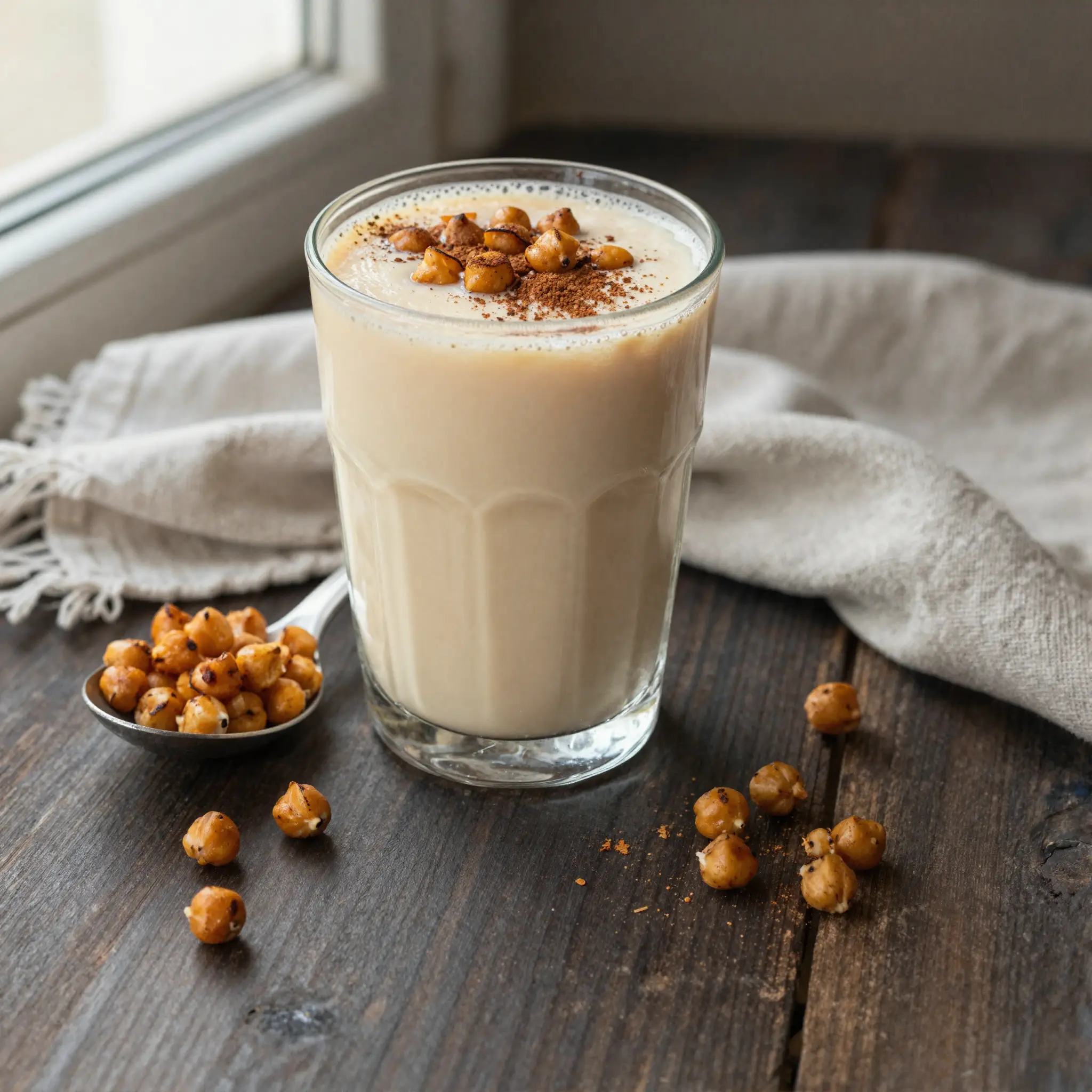
Refrigerate; serve thick and cold, traditionally with cinnamon and roasted chickpeas.
Frequently asked questions
- What is Boza?
- Beverage
- Where does Boza come from?
- Boza is traditionally made in Türkiye.
- Is Boza safe to make at home?
- No significant acute-hazard risk factors documented for traditionally or commercially prepared boza. Safe-practice guidance:
(a) the mild alcoholic content (typically low, but present, since yeast fermentation is part of the process) should be disclosed — boza is traditionally consumed by broad age ranges in some regions specifically because its alcohol content is understood to be low/negligible in short-fermented versions, but this varies with fermentation duration and should not be presented as categorically zero-alcohol without product-specific testing;
(b) general grain-porridge-ferment safety principles (adequate cooking of the base grain, hygienic handling, refrigeration of the finished product given its low final acidity relative to more strongly acidified vegetable ferments) apply; boza is a relatively short-fermentation, refrigerated/quickly-consumed product rather than a long-shelf-stable one, which is itself a safety-relevant handling note.
Community results
No community results published for this ferment yet.